A Step-by-Step Approach to Unlocking Personal and Professional Growth Through Goal Setting, Cognitive Strategies, and Self-Reflection
"The only limit to our realization of tomorrow is our doubts of today." — Franklin D. Roosevelt
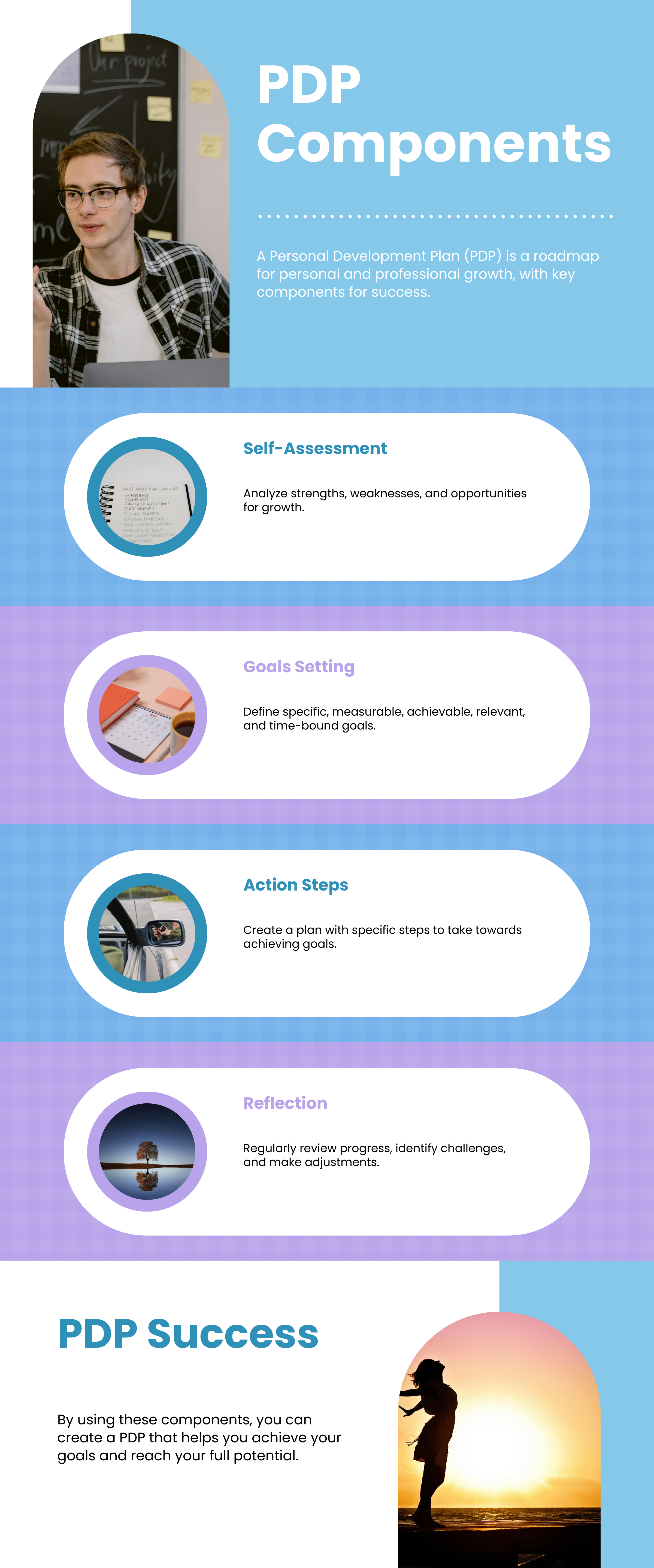
In today's fast-paced world, personal development is more crucial than ever for success, fulfillment, and continuous improvement. One of the most effective ways to achieve personal and professional growth is by creating a Personal Development Plan (PDP). A PDP is more than just a list of goals; it's a structured roadmap that aligns your aspirations with actionable steps to ensure you’re constantly progressing.
A well-designed PDP is essential for various aspects of life, whether you're focusing on career development, improving your emotional intelligence, or honing leadership skills. By creating a tailored PDP, you're not only committing to self-improvement but also setting the stage for long-term success.
Peter Drucker once said, “The best way to predict the future is to create it.” With a PDP, you actively shape your future by identifying potential challenges, leveraging your strengths, and creating action plans to improve weaknesses. Whether it's enhancing communication skills or building emotional resilience, a PDP serves as a comprehensive tool to manage both personal and professional growth.
A PDP helps you align personal and career objectives. It ensures that your professional development plan is directly tied to your individual development goals, whether you're aiming to develop leadership capabilities or enhance technical skills. By doing so, you not only build a clearer career path but also foster personal fulfillment and mental well-being.
"What you think, you become. What you feel, you attract. What you imagine, you create." — Buddha

Personal development requires more than just goal setting; it demands strategies that address mental, emotional, and behavioral growth. Cognitive strategies—such as motivational interviewing techniques, cognitive restructuring, and metacognition strategies—are essential for fostering a mindset of growth and self-awareness. These methods are grounded in psychological theory and provide effective ways to break down mental barriers, challenge negative thinking, and enable sustained progress.
One powerful cognitive tool that can be integrated into your PDP is motivational interviewing techniques. This client-centered method enhances your motivation for change by helping you resolve ambivalence and align your actions with your aspirations. Often used in coaching and counseling, motivational interviewing empowers you to build momentum toward personal growth, whether you're aiming to boost self-regulation, enhance communication skills, or develop leadership abilities.
Furthermore, incorporating metacognition strategies—the practice of thinking about your own thinking—ensures that you remain aware of how your thoughts influence your behaviors. This is where the science of neuroplasticity (the brain's ability to reorganize itself by forming new neural connections) becomes essential. By deliberately engaging in reflective practices and cognitive behavioral strategies, you can challenge unproductive thought patterns and cultivate a growth mindset.
For example, if one of your goals is to improve communication, these cognitive strategies provide a structured method for self-assessment, goal setting, and behavior modification. Through deliberate practice and reflection, you can reshape how you approach conversations and interpersonal dynamics. Integrating cognitive behavioral theory (CBT) techniques into your PDP allows you to challenge limiting beliefs and adopt new ways of thinking that align with your long-term goals.
By combining these cognitive strategies with practical tools, your PDP becomes a dynamic plan that addresses not only your goals but also the mental frameworks necessary to achieve them. This makes it a holistic guide to personal and professional development.
Before diving into the creation of your Personal Development Plan (PDP), it's important to familiarize yourself with several foundational concepts. These frameworks provide structure and context to your personal growth journey, ensuring your goals are actionable and rooted in evidence-based strategies.
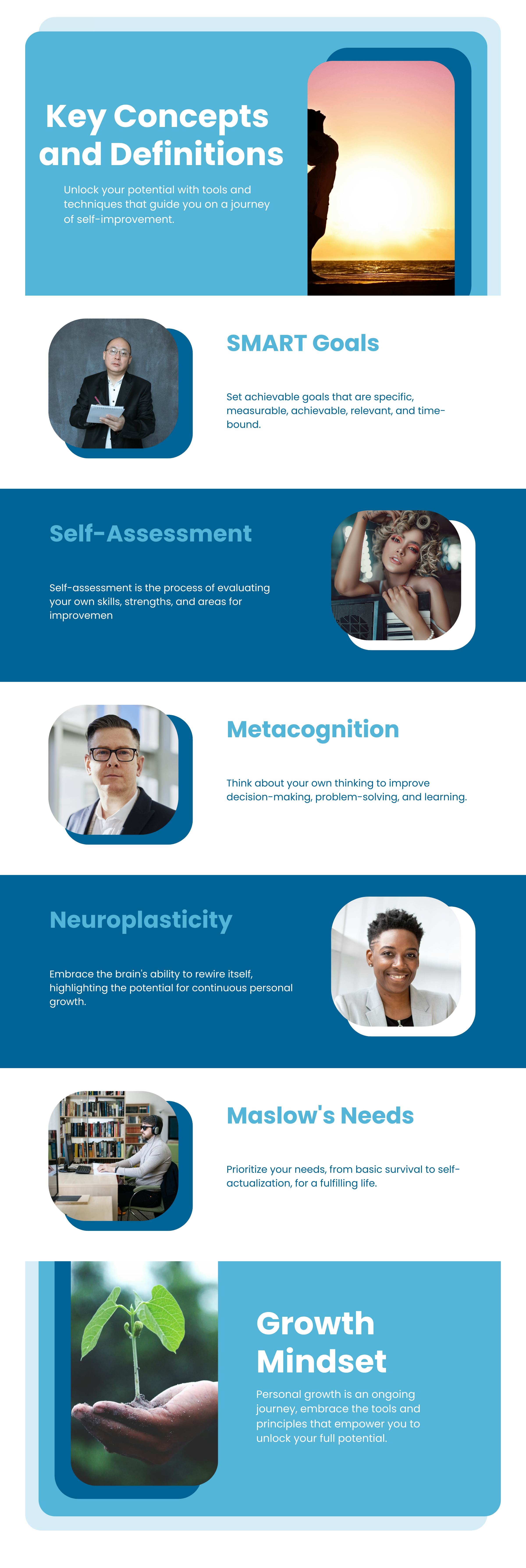
A structured document that outlines your goals, the strategies to achieve them, and the specific steps required for both personal and professional growth. It’s dynamic and should be updated regularly to reflect shifts in your priorities or circumstances.
Goals that are Specific, Measurable, Achievable, Relevant, and Time-bound. This framework ensures clarity and direction, making it easier to track progress and adjust as needed. Whether you aim to enhance communication skills, build emotional intelligence, or develop leadership capabilities, SMART goals provide a concrete path forward.
Self-assessment is the process of evaluating your own skills, strengths, and areas for improvement. Tools like the VIA Character Strengths Survey, Johari Window, or CareerOneStop assessments can provide valuable insights. Regular self-assessment ensures that your goals are aligned with your current capabilities and your authentic self.
This involves thinking about your own thinking. It refers to self-awareness and the ability to monitor and control cognitive processes. Employing metacognitive strategies can significantly enhance your ability to reflect on past experiences and make informed decisions about future actions.
The brain's ability to reorganize and form new connections, particularly in response to learning or experience. This emphasizes that personal development is an ongoing process. By practicing cognitive behavioral therapy (CBT) exercises and reflecting on your behaviors, you can build new, more effective habits that replace old, unproductive ones.
A psychological theory that suggests human needs follow a hierarchical order—from basic physiological needs to self-actualization. Understanding Maslow’s Hierarchy allows you to prioritize your personal growth journey. For example, it's essential to address foundational needs like security and self-esteem before pursuing higher goals like leadership development or emotional intelligence.
Developed by Eric Berne, transactional analysis focuses on understanding social interactions and the different ego states (Parent, Adult, Child) involved in communication. Mastering TA can improve your interpersonal relationships, a crucial aspect of personal development, especially for those in leadership roles.
A psychological framework that focuses on how thoughts, feelings, and behaviors are interconnected. By recognizing and challenging unproductive thought patterns, you can rewire your behaviors for more effective outcomes. CBT worksheets are often used to guide individuals through this reflective process.
Coined by Carol Dweck, this concept emphasizes that abilities and intelligence can be developed through effort, learning, and perseverance. Adopting a growth mindset is key to overcoming challenges and achieving long-term success. It plays a pivotal role in how you approach personal development, encouraging resilience when faced with setbacks.
By understanding these key concepts and integrating them into your PDP, you'll have a solid foundation to create a plan that’s both effective and aligned with your values and aspirations. These frameworks not only offer theoretical insights but also practical applications to guide your self-improvement journey.
To create a robust Personal Development Plan (PDP), it’s important to leverage established psychological and behavioral theories. These frameworks offer a deeper understanding of how individuals learn, grow, and adapt, enabling you to set meaningful goals and address challenges more effectively. Below are several key frameworks to incorporate into your PDP:
Maslow’s theory organizes human needs into a hierarchy, from basic physiological needs to the pinnacle of self-actualization. To achieve personal growth, it's essential to first meet your foundational needs, such as safety and belonging, before focusing on higher goals like leadership development or emotional intelligence. By using Maslow’s Hierarchy, you can better prioritize your personal development and ensure that you’re addressing the most critical areas first.
David Kolb’s model highlights the importance of learning through experience. The cycle involves four stages:
Concrete Experience: Engaging in a specific event or activity.
Reflective Observation: Reflecting on the experience and its outcomes.
Abstract Conceptualization: Forming conclusions and learning from the experience.
Active Experimentation: Applying what you’ve learned to future situations. For example, if you're working to improve your leadership skills, reflecting on your past experiences and using those insights to modify your approach will enhance your growth. Kolb’s cycle emphasizes the importance of both action and reflection in personal development.
SDT posits that individuals have three basic psychological needs—autonomy, competence, and relatedness—which are essential for personal growth and well-being. A well-rounded PDP ensures that these needs are met. For instance, when setting professional goals, ensure that you have a degree of autonomy in how you approach tasks, that the goals are challenging yet achievable (competence), and that your personal relationships and connections are supportive (relatedness).
Transactional Analysis offers a lens through which you can examine your social interactions and communication styles. By understanding your predominant ego state (Parent, Adult, or Child) during interactions, you can improve both professional and personal relationships, a vital aspect of leadership and emotional intelligence development.
Adopting a growth mindset is essential for sustained personal development. With a growth mindset, you view challenges as opportunities for learning and believe that abilities can be developed through dedication and hard work. This mindset is particularly important in overcoming obstacles in leadership, emotional intelligence, and self-regulation.
By integrating these theoretical frameworks into your PDP, you’ll create a plan that is not only actionable but also grounded in well-researched concepts. Each of these frameworks provides unique insights into human behavior, enabling you to tailor your goals and strategies for maximum impact.
Now that you understand the theoretical frameworks that support personal development, it's time to build your own Personal Development Plan (PDP). This step-by-step guide will help you create a comprehensive and personalized plan that aligns with your goals, values, and aspirations.
"Knowing yourself is the beginning of all wisdom." — Aristotle
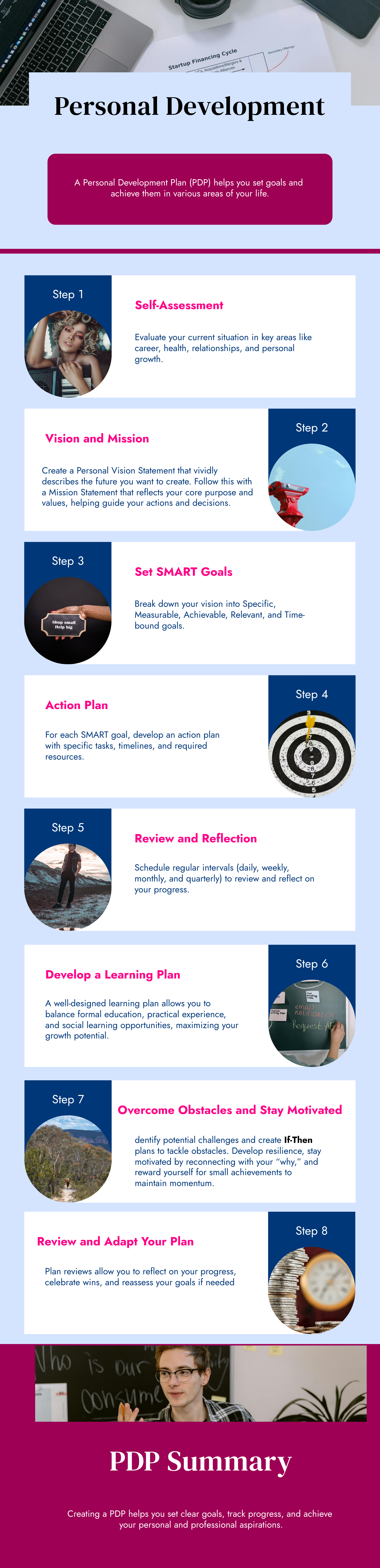
The first step in creating an effective PDP is to perform a thorough self-assessment. This process helps you evaluate your current skills, knowledge, values, and areas for improvement. It also provides a baseline for setting realistic, actionable goals that are aligned with your personal growth journey.
1.1 Assess Your Current Situation
Start by analyzing where you currently stand in key areas of your life, such as your career, relationships, health, and emotional intelligence. This life audit will help you establish a baseline to measure your progress.
Practical Exercise: Life Audit
Create a life audit by listing all the major areas of your life and rating your satisfaction in each on a scale of 1 to 10. Include a brief explanation of your current status in each area and any challenges or opportunities you’re facing. Example:
Career
Satisfaction: 6/10
Current Status: Working as a marketing manager, but aiming for a leadership role.
Opportunities: Exploring leadership training programs.
Challenges: Need to improve public speaking and team management skills.
Health
Satisfaction: 5/10
Current Status: Leading a mostly sedentary lifestyle.
Opportunities: Starting a new fitness routine to increase energy and well-being.
Challenges: Finding time and motivation to exercise regularly.
Relationships
Satisfaction: 7/10
Current Status: Enjoying strong friendships, but working on building closer family relationships.
Opportunities: Planning more quality time with family.
Challenges: Balancing personal and family life due to a busy work schedule.
Personal Growth
Satisfaction: 6/10
Current Status: Regularly reading for self-development, but not engaging in creative hobbies.
Opportunities: Setting aside time for learning new skills or creative pursuits.
Challenges: Struggling to prioritize hobbies alongside work and other commitments.
Reading regularly, but lacking time for hobbies
This exercise helps you visualize areas that require immediate attention and where you’re already succeeding.
1.2 Identify Strengths and Weaknesses
Understanding your strengths allows you to leverage them in achieving your goals, while acknowledging your weaknesses helps you create strategies for improvement.
Tools and Resources:
VIA Character Strengths Survey: Discover your core strengths, such as creativity, leadership, or perseverance.
Johari Window: Gain insights into your strengths and weaknesses through feedback from colleagues or peers.
StrengthsFinder 2.0: Uncover your top talents and learn how to utilize them more effectively.
Practical Exercise: SWOT Analysis
Conduct a SWOT analysis (Strengths, Weaknesses, Opportunities, Threats) for both your personal and professional life. Use this analysis to identify areas where you can focus your development efforts.
Strengths
Strong communication skills: You excel at clearly conveying ideas and collaborating with others.
Leadership experience: You’ve successfully led teams and projects in the past.
Creative problem-solving: You’re able to think outside the box and find innovative solutions.
Weaknesses
Public speaking anxiety: Speaking in front of groups makes you nervous, limiting your ability to lead presentations.
Procrastination: You tend to delay tasks, which impacts productivity.
Limited technical skills: You feel less confident in using certain technology tools or software.
Opportunities
Leadership training at work: Your company offers programs that can help you strengthen your leadership skills.
Networking events: There are opportunities to meet industry leaders and expand your professional network.
Threats
Competition for promotions: Several colleagues are also aiming for the same leadership roles.
Rapid technological changes: Your industry is evolving quickly, and keeping up with new tools is becoming increasingly important.
This analysis gives you a clearer picture of how to leverage your strengths while addressing weaknesses through targeted strategies.
1.3 Clarify Your Values and Motivations
Aligning your goals with your core values ensures that your personal development plan reflects who you are at your core. Understanding your motivations will help guide your actions and make your PDP more meaningful.
Practical Exercise: Personal Values Assessment
Reflect on what matters most to you—whether it’s growth, integrity, creativity, or compassion—and identify your top 5-10 core values. Write down why each value is important to you and how it influences your decision-making.
Example Values:
Integrity: Being honest in all dealings.
Growth: Continuously learning and improving.
Creativity: Innovating and finding new solutions.
Compassion: Showing empathy for others.
Achievement: Striving for excellence in all pursuits.
Ensure that your PDP goals align with these values, so you stay motivated and fulfilled throughout your journey.
1.4 Assess Your Skills and Competencies
Identify the skills you already possess and those that need further development to achieve your personal and professional goals. This step will help you prioritize areas for growth.
Practical Exercise: Skills Matrix
Create a skills matrix to assess your current proficiency in key areas and identify the skills that are most critical to your success.
Public Speaking
Current Proficiency: 2/5
Priority for Development: High
Notes: You find public speaking challenging and want to improve your confidence and ability to deliver presentations effectively.
Leadership Coaching
Current Proficiency: 3/5
Priority for Development: High
Notes: You have some experience in coaching but need further training to enhance your leadership skills and mentor others effectively.
Digital Marketing
Current Proficiency: 4/5
Priority for Development: Medium
Notes: You have a strong foundation in digital marketing but want to stay updated with the latest trends and tools.
Emotional Intelligence
Current Proficiency: 3/5
Priority for Development: High
Notes: You are developing self-awareness and empathy but want to deepen your ability to manage emotions and strengthen interpersonal relationships.
By focusing on the high-priority skills, you can tailor your personal development efforts to areas that will provide the most significant impact on your overall growth.
1.5 Discover Your Learning Style and Optimize Development
Everyone learns differently, and understanding your learning style can make your development journey more effective. Whether you’re a visual, auditory, kinesthetic, or reading/writing learner, identifying your preferences will help you select the best strategies for success.
Practical Exercise: Identify Your Learning Style
Take a learning style assessment to determine your preferred way of absorbing information. Then, create a strategy matrix based on your results.
Visual Learner
Preferred Methods: Diagrams, charts, videos
Development Activities: Create mind maps to organize information, use infographics to visualize complex concepts.
Auditory Learner
Preferred Methods: Lectures, discussions, podcasts
Development Activities: Listen to audiobooks or educational podcasts, join group discussions to deepen understanding.
Kinesthetic Learner
Preferred Methods: Hands-on activities, simulations
Development Activities: Engage in practical exercises, role-playing, or real-life scenarios to reinforce learning.
Reading/Writing Learner
Preferred Methods: Textbooks, writing summaries
Development Activities: Read extensively on topics of interest, write reflections and summaries to solidify knowledge.
Tailoring your learning activities to your style will improve retention and make the learning process more enjoyable.
"The only thing worse than being blind is having sight but no vision." — Helen Keller
Establishing a clear vision and mission for your life is essential for personal development. Your vision provides a long-term perspective of what you want to achieve, while your mission defines your purpose and the principles guiding your actions. Together, these elements serve as the foundation for your personal development goals.
2.1 Craft Your Personal Vision Statement
Your vision statement is a vivid description of your desired future. It reflects what you hope to achieve in your personal and professional life and gives you a sense of purpose.
Practical Exercise: Future Self Visualization
Spend time imagining your ideal life 5 or 10 years from now. What have you accomplished? What skills have you developed? How do you contribute to your community or industry? Create a vision that excites and motivates you.
Example Vision Statement: "In 2028, I am a recognized thought leader in leadership development and emotional intelligence. I run a consulting firm that helps organizations build emotionally intelligent leaders while also maintaining a balanced personal life, prioritizing family, health, and community involvement."
Cognitive Enhancement: Visualization Tips
To make your vision more powerful, engage all of your senses. Imagine what you see, hear, and feel in your ideal future. The more vividly you picture it, the stronger the emotional connection you will form with your vision.
2.2 Develop Your Personal Mission Statement
Your mission statement answers the "why" behind your personal development goals. It provides clarity on your purpose and serves as a compass that guides your actions and decisions.
Practical Exercise: Crafting a Mission Statement
Reflect on the following questions to help you create a concise, meaningful mission statement:
What are your unique talents and strengths?
What are you passionate about?
How can you use your skills to make a positive impact?
What values guide your decisions?
Example Mission Statement: "My mission is to use my strengths in leadership and emotional intelligence to help individuals and organizations realize their full potential, fostering environments of growth, innovation, and well-being."
2.3 Align Your Vision and Mission
It’s important that your vision and mission complement each other. Your mission should guide your daily actions and decisions, while your vision represents the long-term outcomes of those actions.
Practical Exercise: Vision-Mission Alignment Map
Create a visual representation of how your mission leads to your vision. For example, if your mission is focused on leadership coaching, your vision might include becoming a recognized expert in the field and leading impactful workshops. This map helps you see the connection between your short-term actions and long-term goals.
Example:
Vision: Recognized leadership consultant.
Mission: Help leaders develop emotional intelligence and communication skills.
Actions: Provide coaching, write articles, and host workshops on leadership.
2.4 Build Your Personal Board of Directors
A Personal Board of Directors consists of trusted mentors who can offer you guidance, accountability, and support as you pursue your personal development goals. These individuals should bring diverse perspectives and experiences that can enrich your journey.
Practical Exercise: Identify Your Board Members
List 3 to 5 people you trust who can offer valuable insights into different aspects of your life and career. Reach out to them with a clear request for support and explain how their guidance will help you achieve your vision.
Example:
Mentor 1: Leadership coach to provide feedback on professional growth.
Mentor 2: Health and wellness expert for advice on maintaining balance.
Mentor 3: Industry peer to challenge you on technical skills and innovation.
“A goal without a plan is just a wish.” — Antoine de Saint-Exupéry
Goal-setting is at the core of any effective Personal Development Plan (PDP). The SMART framework (Specific, Measurable, Achievable, Relevant, Time-bound) ensures that your goals are clear and actionable, helping you make steady progress towards your vision and mission. This step is about breaking down your big-picture aspirations into manageable and measurable objectives that you can track and achieve over time.
3.1 Understand the SMART Criteria
Setting goals using the SMART framework ensures they are structured for success. Let’s break down each element:
Specific: Your goal should be clearly defined and target a particular area for improvement.
Measurable: You need a way to track progress and determine when the goal has been achieved.
Achievable: The goal should be realistic and attainable, considering your resources and constraints.
Relevant: Your goal must align with your vision and mission, ensuring it contributes to your broader personal and professional aspirations.
Time-bound: A deadline gives your goal urgency and helps keep you focused.
Example:
Non-SMART Goal: "I want to become a better public speaker."
SMART Goal: "Within the next 6 months, I will complete a public speaking course, deliver at least 3 presentations at work, and seek feedback from peers to improve my skills."
Practical Exercise: SMART Goal Worksheet
For each goal you set, use a worksheet to ensure it meets the SMART criteria. Write down each goal and ensure you specify how it will be measured, what resources or actions are required to achieve it, and when you will accomplish it.
3.2 Set Long-Term Goals
Long-term goals are typically three to five years in scope and represent significant milestones that align with your vision. These are your larger aspirations that give direction to your short-term efforts.
Practical Exercise: Long-Term Goal Setting
For each major area of your life (e.g., career, health, relationships, personal growth), set one or two long-term goals that align with your vision. Make sure each goal adheres to the SMART framework.
Example Long-Term Goals:
Career: "By 2027, I will be promoted to a leadership position in my company and complete a certification in executive leadership."
Health: "Within three years, I will maintain a healthy lifestyle by consistently exercising at least three times a week and participating in one major fitness challenge annually."
Cognitive Enhancement: Goal Visualization
Visualize the achievement of each long-term goal. What will your life look like when you’ve reached these milestones? How will you feel? By mentally rehearsing success, you can increase motivation and commitment to these goals.
3.3 Break Down Into Short-Term Goals
Short-term goals (6 to 12 months) act as stepping stones toward your long-term aspirations. These help you maintain momentum and motivation by providing smaller, more immediate targets that move you closer to your big-picture goals.
Practical Exercise: Short-Term Goal Setting
For each long-term goal, break it down into two or three short-term goals that contribute directly to its achievement. Make these goals concrete and attainable within a year.
Example Short-Term Goals:
For Leadership Promotion: "Within 6 months, I will complete a leadership development course and take on a team project to demonstrate my abilities."
For Health and Fitness: "Within the next 3 months, I will build a habit of regular exercise by setting weekly targets, starting with three workouts per week."
3.4 Set Process Goals
Process goals focus on the specific actions and habits you need to develop to achieve your short- and long-term goals. These are the day-to-day behaviors that lead to progress.
Practical Exercise: Setting Process Goals
For each short-term goal, identify one or two process goals that will help you build the necessary habits and discipline to achieve your objective. These goals should be simple and actionable.
Example Process Goals:
For Leadership Development: "I will spend one hour every Monday reading leadership articles and practicing new management techniques."
For Fitness: "I will attend a fitness class every Wednesday and Friday morning for the next three months."
Cognitive Enhancement: Habit Stacking
Combine your process goals with existing habits to reinforce new behaviors. For example, if you already have a morning coffee routine, use that time to review your goals or practice positive affirmations related to your process goals.
“We are what we repeatedly do. Excellence, then, is not an act, but a habit.” — Aristotle
An action plan provides a roadmap for executing your goals. It outlines the specific steps, timelines, and resources needed to turn your vision into reality. This step focuses on translating your SMART goals into actionable, time-bound tasks that move you forward consistently.
4.1 Break Goals into Actionable Steps
To make your goals manageable, break them down into smaller, actionable tasks. Each task should be specific and have a clear deadline. By doing this, you turn abstract aspirations into practical actions that can be tracked and completed.
Practical Exercise: Goal Deconstruction
For each goal, ask yourself, "What specific actions do I need to take to achieve this?" Break down the goal into bite-sized steps and assign a timeline to each.
Example:
Goal: Complete a leadership development course in 6 months.
Action Steps:
Research available leadership courses online (1 week).
Enroll in the course (2 weeks).
Dedicate 3 hours per week to studying course materials (ongoing).
Complete final project and seek feedback from a mentor (month 5).
Cognitive Enhancement: Action Prioritization
Prioritize your tasks by considering their urgency and importance. Focus on high-impact actions that contribute most directly to your goals. This ensures that you spend your time and energy on what truly matters.
4.2 Prioritize Actions
Not all tasks are equally important. Prioritizing helps you focus on the actions that will drive the most progress toward your goals. This step ensures that you tackle high-priority items first, keeping your momentum strong and your workload manageable.
Practical Exercise: Action Prioritization Matrix
Use an Urgency-Importance Matrix (also known as the Eisenhower Matrix) to organize your tasks. Assign tasks to one of the following categories:
Important and Urgent: Tasks that need immediate attention.
Important but Not Urgent: Tasks that are crucial but can be scheduled.
Not Important but Urgent: Tasks that are urgent but don’t contribute significantly to your goals (consider delegating these).
Not Important and Not Urgent: Tasks that can be eliminated or minimized.
Example:
Important and Urgent: Enroll in leadership course.
Important but Not Urgent: Schedule time each week for course study.
Not Important but Urgent: Respond to non-essential work emails.
Not Important and Not Urgent: Scroll social media during breaks.
4.3 Create a Timeline
A timeline provides structure to your Personal Development Plan by assigning deadlines to each action step. This ensures that you maintain momentum and accountability as you work toward your goals. Without a clear timeline, even the most well-crafted plan can falter due to a lack of urgency.
Practical Exercise: Gantt Chart for Goal Tracking
Use a Gantt chart or a simple calendar tool to map out the timelines for each goal and action step. By visualizing the deadlines and dependencies between tasks, you can ensure that you're making consistent progress.
Example Timeline for Completing a Leadership Course:
Week 1: Research and select the leadership development course.
Week 2-3: Enroll in the course and review the course syllabus.
Week 4-12: Dedicate three hours weekly to study.
Week 13-15: Complete the final project and submit for feedback.
Week 16: Reflect on the learning experience and apply new skills at work.
Cognitive Enhancement: Spaced Repetition and Time-Blocking
To ensure consistent progress, use the principle of spaced repetition. Spread out learning sessions or tasks to enhance long-term retention of information. Combine this with time-blocking by setting specific time slots in your calendar to focus solely on your development activities. This approach helps prevent procrastination and ensures sustained effort.
4.4 Identify Resources Needed
Identifying the resources required to achieve your goals is crucial for eliminating roadblocks. These resources may include time, financial investments, learning materials, mentorship, or emotional support. Understanding what you need from the outset allows you to plan effectively and anticipate challenges.
Practical Exercise: Resource Allocation Table
Create a resource allocation table for each goal, listing the necessary resources alongside potential obstacles. Consider how you'll acquire these resources and who or what can assist you.
Example:
Goal: Complete a leadership development course.
Time Needed: 3 hours per week for 12 weeks.
Financial Cost: $500 for the course enrollment fee.
Skills Required: Time management, study discipline, presentation skills.
Support Needed: Accountability partner to check progress and provide feedback.
Potential Obstacles: Balancing work responsibilities with study time.
Cognitive Enhancement: Environmental Design
Optimize your environment to support your goals. For instance, if you're working on a leadership course, set up a dedicated study space free from distractions. This can significantly enhance focus and efficiency.
"The unexamined life is not worth living." — Socrates
Regularly reviewing your progress and reflecting on your experiences is critical for staying on track with your Personal Development Plan. The review process allows you to identify areas of improvement, celebrate successes, and adjust your goals based on new insights or challenges. Reflection helps you internalize your learning and promotes continuous growth.
5.1 Set Review Intervals
Establishing consistent intervals for reviewing your goals is essential for accountability. Without regular check-ins, it's easy for even the most motivated individuals to lose focus. These reviews will help you assess your progress, make necessary adjustments, and refine your approach.
Best Practice: Multi-Tiered Review System
Implement a structured review system with multiple tiers of frequency and focus:
Daily Review: A quick check-in to ensure that you're on track with your daily process goals. Reflect on the small wins and challenges you experienced.
Weekly Review: A more detailed assessment of the short-term goals you're working toward. This is where you identify if any adjustments are needed to maintain progress.
Monthly Review: Evaluate your short-term goals and their alignment with your long-term objectives. Use this time to refine timelines, seek feedback, and address any bottlenecks.
Quarterly Review: Take a broader look at your entire Personal Development Plan, reassessing long-term goals and the overall effectiveness of your strategies.
Practical Exercise: Calendar Setup
Use a calendar or digital planner to schedule each type of review. For example:
Daily: 5-minute end-of-day reflection.
Weekly: 30-minute Sunday afternoon review session.
Monthly: 1-hour session at the end of each month.
Quarterly: A 2-hour deep dive into your PDP at the end of each quarter.
Cognitive Enhancement: Active Retrieval
Active retrieval is a cognitive strategy where you periodically recall and assess information, which enhances retention. During each review session, actively retrieve what you've learned and what adjustments are necessary. This approach helps solidify your progress and internalize the lessons from your personal development journey.
5.2 Conduct Reflective Reviews
Reflection is a deeper process than just reviewing progress—it involves analyzing your experiences to extract meaningful insights. Reflective reviews help you understand why certain strategies worked or didn’t work, allowing you to continuously improve your approach.
Practical Exercise: Reflective Journaling
After significant events or milestones, maintain a journal to explore:
What happened? (Description of the event)
How did I feel? (Emotional response)
What did I learn? (Insights)
How will I apply this learning? (Actionable takeaways)
Example Entry: "Last month, I gave a presentation on leadership strategies. I felt nervous initially, but after using the speaking techniques I learned, I became more confident. I realized that preparation and rehearsing made a significant difference. Next time, I’ll focus more on audience engagement strategies."
Cognitive Enhancement: Metacognition
Engage in metacognitive practices by thinking about your thought processes during the reflection. Analyze how your cognitive biases or emotional states influenced your performance. This meta-awareness can help you refine your decision-making and learning processes moving forward.
5.3 Reflect on Experiences and Learning
Reflecting on your experiences is a powerful method for deepening your understanding and improving your ability to apply what you’ve learned. This process encourages introspection and allows you to draw valuable insights from both successes and failures. Reflection solidifies learning by helping you make sense of the connections between your actions and outcomes, fostering continuous improvement.
Practical Exercise: Reflective Journaling
One of the most effective tools for reflection is journaling. By keeping a dedicated reflective journal, you can explore:
What occurred? (Describe the experience in detail)
What were the outcomes? (Analyze both positive and negative results)
What could have been done differently? (Identify opportunities for improvement)
What did I learn from this? (Extract key lessons)
How will I apply this learning? (Turn reflections into actionable steps)
Example: "Today, I conducted a team-building session using communication exercises. While the team responded well overall, I noticed that a few members were hesitant to participate. In hindsight, I could have provided more icebreaker activities to help everyone feel comfortable. Moving forward, I’ll adjust my approach to create a more inclusive atmosphere from the start."
Cognitive Enhancement: Perspective-Taking
Perspective-taking is an advanced reflection technique where you evaluate the situation from another person’s viewpoint. Imagine how a mentor or respected colleague might assess your actions or decisions. This exercise can reveal blind spots, alternative strategies, or insights you may not have considered.
5.4 Adjust Your Plan
Personal Development Plans (PDPs) are dynamic documents that should evolve as your goals, environment, and circumstances change. It’s essential to remain flexible and adjust your plan to maintain alignment with your long-term vision. Adapting your plan ensures that your efforts remain relevant and effective, especially in a world where personal and professional contexts can shift rapidly.
Practical Exercise: Quarterly Plan Adjustment
During your quarterly review, take a step back and assess all aspects of your PDP—goals, action steps, timelines, and progress. Reflect on whether your current approach still serves your evolving needs, and be ready to make necessary modifications.
Adjust Goals: If certain goals no longer align with your vision or priorities, modify or replace them with new ones. For example, you may shift your focus from building technical skills to leadership development if your career trajectory changes.
Revise Timelines: If you find that you're consistently falling short of deadlines, reassess whether your time frames are realistic and make adjustments accordingly. Alternatively, you may need to accelerate timelines if you’re progressing faster than expected.
Refine Action Steps: Evaluate whether the actions you’ve outlined are still the most effective way to achieve your goals. Consider incorporating new strategies or tools that could enhance your efforts.
Add or Remove Resources: Assess whether the resources at your disposal are adequate. If new learning opportunities, mentorships, or financial resources become available, integrate them into your plan.
Example:
"After my Q3 review, I realized my goal of improving technical skills doesn’t align with my recent promotion to a leadership role. I will shift my focus toward leadership coaching and communication strategies. I’ve also added a mentorship program to my resources and extended the timeline for completing a leadership certification."
Cognitive Enhancement: Scenario Planning
Use scenario planning to anticipate potential changes and ensure flexibility in your PDP. Develop multiple scenarios based on different possible outcomes (e.g., changes in your career, personal life, or external environment). This approach helps you remain prepared and agile, ready to pivot your plan as needed.
Continuous learning is at the heart of personal development. By creating a structured learning plan, you ensure that you’re actively acquiring the skills, knowledge, and insights needed to achieve your goals. A well-designed learning plan allows you to balance formal education, practical experience, and social learning opportunities, maximizing your growth potential.
6.1 Identify Learning Needs
Based on your self-assessment and goals, the next step is to identify the specific skills and knowledge areas you need to develop. This ensures that your learning is intentional and aligned with your overall Personal Development Plan.
Practical Exercise: Learning Needs Assessment
Create a learning needs assessment table that outlines the skills you need to develop, your current proficiency in each, and the level of proficiency you aim to achieve. This will guide your selection of learning activities and ensure that you’re addressing the most critical gaps in your skillset.
Emotional Intelligence
Current Proficiency: 3/5
Target Proficiency: 5/5
Action Plan: Enroll in an emotional intelligence (EI) course and practice self-awareness techniques regularly.
Public Speaking
Current Proficiency: 2/5
Target Proficiency: 4/5
Action Plan: Join a Toastmasters group and commit to giving monthly presentations to improve public speaking skills.
Project Management
Current Proficiency: 4/5
Target Proficiency: 5/5
Action Plan: Take an advanced project management certification to deepen expertise.
Leadership Coaching
Current Proficiency: 2/5
Target Proficiency: 5/5
Action Plan: Attend leadership workshops and find a mentor to provide coaching and guidance.
To further enhance your learning process, use knowledge mapping to visualize the connections between what you already know and what you need to learn. This technique helps identify learning gaps and clarifies which areas require the most focus.
6.2 Choose Learning Methods
Different skills require different learning approaches. By choosing methods that align with your personal learning style and the skills you're targeting, you can accelerate your development and make the process more engaging.
Practical Exercise: 70-20-10 Learning Plan
Apply the 70-20-10 model, which suggests that 70% of learning should come from real-world experiences, 20% from developmental relationships (such as mentorship), and 10% from formal education (such as courses or workshops). This balanced approach ensures that you’re learning through hands-on practice, while also gaining insights from others and structured education.
Example for Leadership Development:
70%: Lead a cross-functional team project to gain hands-on leadership experience.
20%: Engage with a leadership mentor or coach to get feedback on your progress.
10%: Enroll in a formal leadership course to learn best practices and theoretical frameworks.
Cognitive Enhancement: Deliberate Practice
Use the principle of deliberate practice to target the most challenging aspects of the skills you’re developing. Deliberate practice involves setting specific goals, receiving immediate feedback, and repeating tasks to achieve gradual improvement. This method is particularly effective when learning complex skills like leadership or public speaking.
6.3 Create a Learning Schedule
A structured learning schedule is essential for maintaining consistency and ensuring you dedicate time to developing the necessary skills. Without a plan in place, learning can become sporadic or secondary to other priorities, which can slow down your personal development progress.
Practical Exercise: Weekly Learning Schedule
Design a weekly learning schedule that allocates specific time blocks for learning activities. These time blocks should be realistic given your other commitments, yet consistent enough to help you build momentum.
Monday
Learning Activity: Emotional Intelligence (EI) course
Time Commitment: 7:00 PM - 8:00 PM
Tuesday
Learning Activity: Public Speaking practice
Time Commitment: 6:00 PM - 7:00 PM
Wednesday
Learning Activity: Leadership Development case study review
Time Commitment: 8:00 PM - 9:00 PM
Thursday
Learning Activity: Peer mentoring session
Time Commitment: 7:00 PM - 8:00 PM
Friday
Learning Activity: Journaling and reflection on leadership progress
Time Commitment: 6:30 PM - 7:00 PM
Saturday
Learning Activity: Practical project management skill application
Time Commitment: 10:00 AM - 12:00 PM
To ensure you’re making progress, regularly revisit your schedule to assess whether the time you’ve allocated is sufficient and whether adjustments are needed based on your evolving priorities.
Cognitive Enhancement: Habit Stacking
Incorporate habit stacking to make learning a seamless part of your routine. Habit stacking is a strategy where you link new learning activities to existing habits. For example, if you already have a habit of drinking coffee every morning, you could stack a 10-minute leadership podcast or book reading right after your coffee routine. This makes the new habit easier to adopt.
6.4 Track and Evaluate Learning Progress
Tracking and evaluating your learning progress helps you understand what’s working and where you might need to adjust your approach. This ongoing evaluation keeps you motivated, provides a sense of accomplishment, and ensures that you’re continuously moving toward your goals.
Practical Exercise: Learning Reflection Log
Maintain a learning reflection log to record insights after each learning activity. This log helps solidify what you’ve learned and ensures that the information is internalized.
Use the following format for your reflection:
What did I learn today? (Summarize the key takeaways)
How does this connect to my personal development goals? (Explain the relevance to your PDP)
How can I apply this learning? (Identify specific ways you will put the knowledge into practice)
What remains unclear or needs further exploration? (Note any areas that require additional learning or clarification)
Example Learning Reflection Log: "Today, I learned about emotional intelligence through the lens of self-regulation. I realized that I need to improve my ability to pause before reacting in stressful situations, which directly connects to my goal of becoming a more empathetic leader. Moving forward, I’ll practice mindfulness techniques to help manage my emotional responses. However, I need to explore deeper methods for handling high-stakes conflicts more effectively."
Cognitive Enhancement: Feedback Loops
Establish regular feedback loops by seeking input from mentors, peers, or supervisors on your learning progress. Feedback allows you to pinpoint areas for improvement and reinforces your commitment to growth. Constructive feedback also offers external validation that can motivate you to continue your learning journey.
7.1 Identify Potential Obstacles
Every personal development journey is accompanied by obstacles—whether they come in the form of time constraints, limited resources, or external factors like unexpected career shifts. The key to overcoming these challenges lies in anticipating potential roadblocks and preparing strategies to address them in advance.
Practical Exercise: Obstacle Identification
For each major goal in your Personal Development Plan, brainstorm potential obstacles that could hinder your progress. Start by asking, “What could go wrong?” and list the internal and external factors that may arise.
Example:
Goal: Complete a leadership certification by December.
Potential Obstacles:
Time: Increased work responsibilities may limit study time.
Financial: Budget restrictions may affect the ability to enroll in courses.
Motivation: Loss of momentum due to slow progress or unexpected setbacks.
Once you have identified these obstacles, you can begin to develop strategies to either mitigate or prevent them.
Cognitive Enhancement: Pre-Mortem Analysis
A powerful tool for anticipating potential challenges is pre-mortem analysis. In this exercise, you imagine that your plan has failed, and then work backward to identify what could have led to that failure. By analyzing these potential pitfalls, you can take preventive measures, making your PDP more robust and resilient.
7.2 Develop Mitigation Strategies
Once you’ve identified potential obstacles, it’s essential to develop specific strategies to either overcome or avoid them. These strategies should be proactive and designed to minimize disruption to your personal development journey.
Practical Exercise: If-Then Planning
For each identified obstacle, create an if-then plan. This involves thinking through hypothetical situations and creating predefined responses. Having these plans in place allows you to react more quickly and effectively when challenges arise.
Example:
Obstacle: Increased workload limits study time.
If work demands become overwhelming, then I will set boundaries with my team and delegate non-essential tasks to free up time for study.
Obstacle: Budget restrictions affect course enrollment.
If finances are tight, then I will seek out free or low-cost alternatives, such as online courses, webinars, or scholarships.
Cognitive Enhancement: Constraint Reframing
Another cognitive tool to use when faced with challenges is constraint reframing. This technique encourages you to view obstacles as opportunities for growth. For instance, if you have limited time for learning due to a demanding job, consider this an opportunity to improve your time management and prioritization skills.
7.3 Build Resilience
Resilience is key to maintaining progress in your personal development, especially when you encounter setbacks or challenges. Building resilience not only helps you recover from obstacles but also strengthens your ability to face future difficulties with greater ease. Resilience is a skill that can be developed through mindfulness, emotional intelligence, and effective coping strategies.
Practical Exercise: Resilience Journal
Start a resilience journal to document how you face and overcome challenges. Journaling helps you reflect on difficult situations and recognize patterns in how you respond to them. By acknowledging these patterns, you can better understand your strengths and areas for improvement.
Example Journal Entry: "This week, I faced a significant challenge when my project timeline was suddenly accelerated by two weeks. Initially, I felt overwhelmed, but after taking a moment to breathe and reflect, I broke down the tasks into manageable steps and sought help from my team. As a result, we completed the project on time. I learned that pausing to regroup, rather than panicking, allowed me to focus and delegate effectively."
Documenting such experiences strengthens your awareness of how you handle adversity and helps you develop a growth-oriented mindset for future obstacles.
Cognitive Enhancement: Cognitive Restructuring
Leverage cognitive restructuring techniques to challenge and reframe negative thought patterns that may arise during stressful situations. Cognitive restructuring, a tool used in Cognitive Behavioral Therapy (CBT), enables you to recognize irrational or unproductive thoughts and replace them with more balanced, constructive perspectives.
For instance, when you encounter a difficult situation, instead of thinking, “I’ll never get through this,” reframe it as, “This is a challenge, but I’ve overcome tough situations before. I can do it again.”
Incorporating cognitive restructuring into your resilience practice will help you stay mentally and emotionally strong during adversity.
7.4 Maintain Motivation
Maintaining long-term motivation is often one of the hardest parts of personal development. It’s normal for enthusiasm to wane over time, especially when faced with prolonged periods of hard work or slow progress. However, with the right strategies, you can keep your motivation levels high and ensure continued progress toward your goals.
Practical Exercise: Motivation Toolkit
Build a motivation toolkit to help you stay inspired and focused. This toolkit can include:
Core motivations: A list of reasons why you embarked on your personal development journey. Revisit these when you feel discouraged.
Visualization techniques: Regularly visualize your future self having achieved your goals. Imagine how you’ll feel, what your life will look like, and how the effort will be worth it.
Inspirational quotes or affirmations: Collect quotes that resonate with you and reflect your personal values or goals. For instance, a quote from Franklin D. Roosevelt, "The only limit to our realization of tomorrow is our doubts of today," can remind you to keep pushing forward.
Reward systems: Establish a reward system for yourself. After completing small milestones, treat yourself to something you enjoy, whether it’s a small gift, a break, or an experience you’ve been looking forward to.
By having this toolkit ready, you can quickly draw upon it when you feel your motivation dipping.
Cognitive Enhancement: Temporal Motivation Theory
Apply Temporal Motivation Theory (TMT) to enhance your motivation. TMT suggests that people are more motivated by rewards or outcomes that are close in time. Therefore, breaking long-term goals into short-term tasks with immediate rewards can help maintain momentum.
For example, instead of focusing solely on a long-term goal like earning a leadership certification by the end of the year, create smaller goals—such as completing a module or a chapter each week—and reward yourself each time you meet these short-term milestones. This approach ensures you receive regular boosts in motivation as you make incremental progress.
8.1 Set Review Intervals
Your Personal Development Plan (PDP) should be a living document that evolves with you. Regular reviews are essential for ensuring that you remain on track and can make timely adjustments based on any changes in your circumstances or priorities. These reviews allow you to reflect on your progress, celebrate wins, and reassess your goals if needed.
Best Practice: Multi-Tiered Review System
Establish a multi-tiered review system that allows for regular check-ins on your short-term and long-term goals:
Daily Review: This is a quick check-in to ensure that you’re staying on track with your daily tasks and habits.
Weekly Review: A more detailed review where you evaluate the progress you’ve made during the week, adjust your focus, and identify any challenges.
Monthly Review: Assess your progress toward short-term goals and evaluate any areas that require more attention.
Quarterly Review: Conduct a thorough assessment of your overall PDP. Reassess your long-term goals and measure whether your daily and weekly actions are moving you closer to achieving those goals.
Practical Exercise: Review Calendar Setup
Set up calendar reminders for each review interval. These reminders will hold you accountable and ensure that you take the time to reflect on your progress regularly. For example, you might schedule your weekly review every Sunday evening, with monthly and quarterly reviews at the end of each month or quarter.
Cognitive Enhancement: Active Retrieval
Incorporate active retrieval into your review process. Active retrieval, a learning strategy supported by cognitive science, involves recalling information rather than passively reviewing it. During your review sessions, instead of simply reading over your goals, actively recall what you’ve accomplished, where you’ve struggled, and what adjustments you need to make. This technique enhances retention and helps you stay focused on your objectives.
8.2 Conduct Reflective Reviews
Reflective reviews go beyond just tracking progress; they allow you to analyze your experiences, gain insights, and make informed decisions about future steps. Reflection is crucial for understanding both your successes and your setbacks and for identifying patterns in your behavior.
Practical Exercise: Reflective Journaling
Use reflective journaling to explore your thoughts and emotions after significant milestones or challenges. Reflect on the following:
What went well? Identify successes and what contributed to them.
What didn’t go as planned? Understand the reasons for any setbacks.
What did I learn from this experience? Extract key takeaways and lessons.
How will I apply these learnings moving forward? Plan actionable steps based on what you’ve learned.
Example Reflective Journal Entry: "I successfully completed my first major team project this month. While the outcome was positive, I realized I wasn’t delegating enough. Moving forward, I’ll practice distributing tasks more evenly among team members to prevent burnout."
This reflective process helps you build self-awareness and ensures that you continuously improve your approach to personal and professional growth.
Cognitive Enhancement: Metacognition
Incorporate metacognitive strategies during your reviews by thinking about how you think. Metacognition involves reflecting on your thought processes and strategies during successes and failures. By analyzing your mindset, decision-making, and problem-solving methods, you can refine your approach and become more self-aware.
8.3 Adjust Your Plan as Needed
Your Personal Development Plan (PDP) is not static; it evolves with your circumstances, goals, and life experiences. Regularly adjusting your plan ensures that it remains aligned with your changing needs, whether due to new opportunities, challenges, or personal growth. This dynamic approach allows you to stay flexible while remaining focused on your long-term vision.
Practical Exercise: Quarterly Adjustments
During your quarterly reviews, take time to critically assess your current goals, progress, and any obstacles you’ve encountered. Consider the following:
Are my long-term goals still relevant? Reflect on whether your goals are still aligned with your vision. For instance, if you've shifted career focus, you may need to update your professional development goals accordingly.
What new opportunities have emerged? Stay open to new opportunities that might influence your path, whether it’s a promotion, a new skill you want to learn, or a change in your industry.
Do any goals need adjustment or removal? If certain goals are no longer serving you or seem less relevant, it’s okay to remove or modify them. This ensures your PDP stays focused and actionable.
Example of a Quarterly Adjustment: "Originally, my long-term goal was to complete an advanced digital marketing certification by the end of the year. However, after shifting my career focus towards leadership coaching, I’ve decided to replace this goal with a new objective: complete a leadership coaching certification by the next quarter. I’ll also adjust my short-term goals to reflect this shift, such as researching coaching programs and enrolling by the end of the month."
By regularly adjusting your PDP, you ensure that your personal and professional development remains relevant, intentional, and adaptable.
Cognitive Enhancement: Scenario Analysis
Use scenario analysis to explore different potential outcomes as you adjust your plan. Consider various possibilities, such as best-case, worst-case, and most likely scenarios. By preparing for multiple futures, you’ll be more agile and able to adapt quickly to changes in your environment, whether they’re personal, professional, or external factors like economic or industry shifts.
8.4 Embrace Lifelong Learning
One of the most critical components of personal development is the commitment to lifelong learning. As the world continues to evolve rapidly—especially with advances in technology, industry trends, and global shifts—staying relevant requires continuous learning. Embracing lifelong learning ensures that you remain adaptable, resilient, and capable of seizing new opportunities.
Practical Exercise: Continuous Learning Goals
Identify areas of knowledge or skills that you want to develop over the long term. These learning goals could be related to your current career, personal interests, or future aspirations. Use a learning needs assessment to list skills and rate your current proficiency. This helps you pinpoint areas that need further development.
Emotional Intelligence
Current Proficiency: 3/5
Target Proficiency: 5/5
Action Plan: Enroll in an emotional intelligence course and practice self-awareness and empathy exercises daily.
Public Speaking
Current Proficiency: 2/5
Target Proficiency: 4/5
Action Plan: Join a public speaking club like Toastmasters and practice delivering speeches regularly.
Data Analysis
Current Proficiency: 4/5
Target Proficiency: 5/5
Action Plan: Take advanced data analysis courses and apply your learning to real-world projects.
By identifying and tracking these learning goals, you ensure that your personal development encompasses not just your current needs but also positions you for future growth.
Cognitive Enhancement: 70-20-10 Learning Model
Apply the 70-20-10 Model of Learning, which posits that:
70% of learning comes from practical, on-the-job experiences.
20% comes from developmental relationships, such as mentoring or coaching.
10% comes from formal education, like courses or workshops.
To fully integrate this model into your PDP, structure your learning activities to maximize real-world experience while supplementing it with formal education and social learning. For instance, if your goal is to enhance leadership skills, actively take on leadership roles at work (70%), seek mentorship from an experienced leader (20%), and attend leadership training seminars (10%).
Practical Exercise: Weekly Learning Schedule
Incorporate learning activities into your weekly routine to ensure consistent progress. Dedicate specific blocks of time each week to your learning goals, and treat these appointments with the same importance as work meetings or personal commitments.
Example Weekly Learning Schedule:
Monday
Learning Activity: Emotional Intelligence online course
Time Commitment: 1 hour
Tuesday
Learning Activity: Public speaking practice (Toastmasters)
Time Commitment: 1 hour
Wednesday
Learning Activity: Leadership case study reading
Time Commitment: 45 minutes
Thursday
Learning Activity: Peer mentoring session on leadership skills
Time Commitment: 1 hour
Saturday
Learning Activity: Project management practice in real-world scenarios
Time Commitment: 2 hours
By creating a structured learning plan, you ensure that personal growth becomes a regular, manageable part of your life.
Cognitive Enhancement: Deliberate Practice
Integrate the principles of deliberate practice into your learning plan. Deliberate practice involves focusing on the most challenging aspects of your skills, receiving immediate feedback, and continually refining your performance. This structured approach is especially effective for complex skills like leadership, communication, and technical expertise.
For example, if public speaking is your focus, instead of just speaking more frequently, concentrate on areas that challenge you—such as handling audience questions or using persuasive body language—and seek feedback after each presentation. Consistently targeting your weak spots will accelerate your growth.
Conclusion: Embracing the Journey of Personal Development
Creating and maintaining a Personal Development Plan (PDP) is a transformative process that empowers you to actively shape your future and continuously improve yourself. By following this comprehensive guide, you have laid a solid foundation for self-growth, enabling you to achieve both personal and professional goals.
Your PDP is more than just a document; it’s a living roadmap that evolves as you do. The process of reviewing, adjusting, and enhancing your plan ensures that you remain aligned with your vision, mission, and values, even as your circumstances change. It also guarantees that you are always progressing toward a more fulfilling and successful life.
As you continue on this journey, remember the following key principles:
Self-awareness is key: Regular self-assessment and reflection allow you to stay true to your core values and make informed adjustments to your goals.
Goals provide direction: Your SMART goals give you concrete steps toward achieving your vision, keeping you focused and motivated.
Learning is a lifelong pursuit: Commit to continuously improving your skills and knowledge, staying adaptable and relevant in a fast-changing world.
Resilience drives success: Be prepared to face setbacks, but also trust in your ability to overcome them by building resilience and maintaining motivation.
Review and refine regularly: Regular reviews of your progress ensure that your plan stays aligned with your evolving goals and circumstances.
As you reach the end of this guide, remember that personal development is a continuous process. It’s not about perfection but about making consistent progress toward becoming the best version of yourself. Take pride in every step you take, no matter how small, and celebrate your wins along the way.
Next Steps:
Review your PDP: Take a final look at the plan you've developed, ensuring it aligns with your current values, goals, and aspirations.
Set your first review: Schedule your first formal review session, creating an immediate sense of accountability and progress tracking.
Start small: Choose one actionable step from your PDP that you can begin today. By taking that first step, you create momentum and reinforce your commitment to personal development.
Final Thought: As Lao Tzu said, "The journey of a thousand miles begins with a single step." You've taken the first step by creating your Personal Development Plan. Now, with the right mindset, commitment, and the tools you’ve learned in this guide, continue this journey with confidence and enthusiasm.
Start Your PDP Journey Today:
Download Your Free PDP Template: To help you get started, download our free, customizable PDP template. This template is designed to guide you through each step outlined in this article, making it easier to map out your goals, actions, and reflections.
Checklist to Kickstart Your Planning Process: Use our PDP checklist to ensure you've covered all the critical components. This checklist serves as a quick reference to keep you on track as you begin to develop your plan.
Taking these first steps will empower you to take control of your future and begin the process of continuous improvement. Whether you're an aspiring leader, a business owner, or someone committed to lifelong learning, your Personal Development Plan will be your roadmap to success.
"Excellence is an art won by training and habituation. We do not act rightly because we have virtue or excellence, but we rather have those because we have acted rightly." — Aristotle
Subscription and Further Engagement
To continue your growth journey and stay motivated, consider engaging further with our community:
Subscribe to Our Newsletter: Stay updated with the latest tips, tools, and resources on personal development. By subscribing, you'll receive exclusive content, including expert interviews, success stories, and practical advice delivered directly to your inbox.
Join Our Workshop: Interested in diving deeper into your personal development journey? Join our upcoming workshop where we'll explore advanced strategies for effective personal development planning, share real-world examples, and offer personalized guidance.
Engage with More Content: Explore our blog and social media channels for more insights and inspiration. We regularly post content that will help you stay on track with your goals and connect with like-minded individuals who are also committed to growth.
Remember, the best time to start is now. Take that first step, and watch as your efforts compound into meaningful, lasting growth.
Q1: How can I align my personal development goals with my organization’s objectives without compromising my own aspirations?
Aligning personal development goals with organizational objectives requires strategic thinking and a clear understanding of both your personal aspirations and the company’s goals. Here’s how you can strike that balance:
Analyze the organization's mission: Understand your company’s mission, vision, and strategic goals. This allows you to identify where your personal development can contribute directly to organizational success.
Find synergies: Look for overlapping areas where your personal goals, such as leadership development or emotional intelligence, can directly benefit your role and the organization.
Leverage resources: Take advantage of company resources like leadership training, mentorship programs, or skill-building opportunities that align with both your personal and professional goals.
Communicate proactively: Regularly discuss your development goals with your manager or HR team, demonstrating how your growth benefits the organization as well.
Tip: Use a Goal Alignment Matrix to ensure that both your personal goals and the company’s objectives are being met. By proactively seeking alignment, you ensure mutual benefit without sacrificing your individual aspirations.
Q2: How do I balance long-term aspirations with short-term needs in my PDP?
Balancing long-term aspirations with immediate needs is essential for sustainable personal development. One useful framework for this is the OKR (Objectives and Key Results) model:
Objectives: Define long-term, aspirational goals that align with your personal vision.
Key Results: Break these down into shorter-term, measurable results that allow you to track progress every quarter.
Additionally, you can use the 20% Time Principle: Dedicate 80% of your time to immediate, short-term needs and 20% to long-term goals. This allows you to make consistent progress toward your bigger ambitions without neglecting pressing tasks.
Example: If your long-term goal is to transition into a leadership role, your short-term needs might include improving your current job performance. Break your long-term goal into actionable steps, such as completing a leadership course or mentoring a colleague, while still focusing on current job demands.
Q3: How can I measure the ROI (Return on Investment) of my personal development efforts?
Measuring the ROI of personal development can be challenging but is possible by tracking both tangible and intangible benefits:
Define measurable outcomes: Start by identifying clear, measurable outcomes for each goal, such as completing a certification, increasing your job performance, or improving leadership effectiveness.
Quantitative metrics: Look for ways to quantify success, such as salary increases, promotions, or project successes directly related to your personal development activities.
Qualitative feedback: Collect feedback from peers, mentors, or supervisors on soft skills like communication and emotional intelligence.
Balanced scorecard: Use a personal balanced scorecard that tracks metrics across different areas—career, personal growth, health, and relationships—to measure overall progress.
Tracking these indicators over time will help you assess whether your personal development is delivering the desired return on your investment.
Q4: How do I adapt my PDP during times of rapid change or uncertainty, such as during a global crisis or a career transition?
When faced with uncertainty, your PDP needs to be agile and adaptable. Here’s how to adjust during challenging times:
Embrace agile principles: Shorten your review cycles from quarterly to monthly or even weekly. This ensures that you can quickly pivot when faced with unexpected changes.
Scenario planning: Prepare for multiple potential outcomes by identifying the best-case, worst-case, and most-likely scenarios. This helps you adapt quickly no matter what happens.
Focus on adaptable skills: During times of uncertainty, prioritize learning adaptable skills like critical thinking, emotional intelligence, and resilience. These skills are valuable across a wide range of circumstances.
Build resilience: Focus on self-care, stress management, and maintaining a growth mindset. This ensures that you remain mentally and emotionally strong in times of adversity.
Example: During a global crisis, you might need to pause certain professional development activities (e.g., pursuing an MBA) and focus on building resilience and stress management skills, which will help you stay balanced and effective.
Q5: How can I maintain motivation when facing setbacks or loss of momentum?
Maintaining momentum in your personal development journey can be difficult, especially when facing setbacks. Here are some strategies to help you stay motivated:
Reconnect with your ‘why’: Go back to your core motivations. Remind yourself why you set these goals in the first place and the long-term benefits of achieving them.
Break goals into smaller tasks: Divide your larger goals into smaller, manageable tasks that provide quick wins. Celebrate these small victories to boost motivation.
Practice self-compassion: Setbacks are part of the journey. Be kind to yourself, and don’t expect perfection. Treat each obstacle as an opportunity to learn.
Create accountability: Partner with a mentor, colleague, or accountability partner who can help you stay on track and provide encouragement when needed.
Reward yourself: Build in small rewards for milestones you achieve, whether that’s taking a break, enjoying a treat, or engaging in a favorite hobby.
Example: If you're struggling to stay motivated with a long-term project, set a small, achievable daily task (e.g., "spend 10 minutes reviewing course materials") and reward yourself with a short break or activity you enjoy.
Q6: How do I integrate continuous learning into my daily routine without overwhelming myself?
Continuous learning is essential for personal development, but it can be difficult to integrate into a busy schedule without feeling overwhelmed. Here’s how to do it effectively:
Microlearning: Break down your learning into small, manageable sessions (e.g., 10-15 minutes per day). Focus on one concept or skill at a time, which makes learning less daunting and more sustainable.
Leverage dead time: Make use of time that might otherwise go to waste, such as during commutes, while exercising, or while waiting. Listen to educational podcasts, audiobooks, or watch short video lessons during these periods.
Create a learning schedule: Block out specific time for learning each week. Even 30 minutes a day can make a significant difference over time. Stick to your schedule like you would with any other important task.
Incorporate learning into tasks: Practice applying new skills or concepts to your daily work or personal life. For example, if you’re learning leadership techniques, try to apply them during team meetings.
Set realistic goals: Instead of overwhelming yourself with a long list of skills to master, focus on a few key areas. Setting specific learning goals (e.g., “complete one online course in leadership this month”) makes progress more attainable.
Example: If you are trying to improve public speaking, listen to expert tips during your commute, practice a short speech for five minutes in the morning, and then apply a new technique in your next meeting. This incremental approach keeps you learning without becoming overwhelming.
Q7: How do I handle conflicting advice from different mentors or resources in my personal development journey?
When you receive conflicting advice from mentors or resources, it’s important to evaluate and integrate the guidance in a way that aligns with your personal values and goals. Here’s how to navigate this:
Understand the context: Different advice may be given based on varying contexts, experiences, or goals. Reflect on the context in which the advice was provided and whether it fits your specific situation.
Seek common principles: Rather than focusing on the conflicting tactics or details, look for overarching principles. Often, both pieces of advice stem from the same fundamental ideas, even if they suggest different approaches.
Experiment: Personal development is a process of trial and error. Try out different approaches to see what works best for you. Sometimes, experimenting with both sets of advice will help clarify which is more effective in your specific context.
Trust your judgment: You know your personal and professional needs best. Trust your instincts when deciding which advice resonates most with your values and goals. There is no one-size-fits-all approach to personal development.
Consult additional sources: If you’re unsure which path to follow, consult other trusted sources or mentors. Multiple perspectives can help clarify the best course of action.
Example: If one mentor suggests prioritizing technical skills for career advancement, while another recommends focusing on leadership development, assess your long-term goals. If you’re aiming for a leadership role, balance your efforts by incorporating both technical skill development and leadership training.
Q8: How do I balance personal development goals across different life domains (career, health, relationships, etc.) without spreading myself too thin?
Balancing personal development goals across multiple areas of life is crucial to avoiding burnout and ensuring that progress is made in a sustainable way. Here are strategies to maintain that balance:
Wheel of Life Assessment: Use the “Wheel of Life” tool to assess your satisfaction across different domains (e.g., career, health, relationships, personal growth). This will help you identify which areas need immediate attention and which can be maintained at a steady pace.
Focus on seasons of growth: Recognize that different areas of your life may require more attention at different times. For example, you might focus on career development for a few months, then shift your focus to health or relationships. It’s important to recognize the cyclical nature of growth.
Set priorities: Not every domain needs an equal amount of focus all the time. Set clear priorities based on your current circumstances and long-term vision. Choose 1-2 key areas to focus on while maintaining steady progress in others.
Look for synergies: Find areas where personal development efforts overlap. For instance, improving time management skills can enhance both your career and personal life. A goal to improve communication skills could benefit both work relationships and personal relationships.
Practice integrative thinking: Instead of viewing different life domains in isolation, think of how you can integrate them. For example, practicing mindfulness can improve your mental health, which in turn can lead to better focus at work and stronger relationships.
Example: If you are balancing a demanding career, a desire to improve physical health, and maintaining strong relationships, you might prioritize career development while scheduling small, consistent actions for health (e.g., daily exercise) and relationships (e.g., weekly calls or meetups with family and friends).
Q9: How can I effectively leverage technology and AI in my personal development without becoming overly dependent on tools?
Technology and AI can enhance personal development, but it’s important to maintain a balanced approach that ensures you're still thinking critically and staying engaged in your own growth. Here’s how to leverage technology effectively:
Use tech to enhance, not replace: Utilize technology for tasks like scheduling, tracking progress, or accessing learning materials, but don’t rely solely on apps or AI for decision-making. Technology should support your efforts, not replace critical thinking and self-reflection.
Set digital boundaries: Periodically take breaks from technology to engage in self-reflection and personal assessment without external tools. This allows you to reconnect with your own thoughts and evaluate progress holistically.
Select the right tools: Choose technology tools that align with your learning style and goals. For example, you might use a goal-tracking app for habit formation or an AI-based coaching platform to gain insights, but ensure the tools are customized to your needs.
Evaluate tech suggestions: AI tools often provide recommendations based on algorithms. Evaluate these suggestions critically, considering your unique context and values.
Blend traditional and modern methods: Balance technology use with traditional development methods, such as reading physical books, journaling, or engaging in face-to-face discussions with mentors. This ensures a well-rounded approach to learning and growth.
Example: You might use an AI-based learning platform like Coursera or Duolingo for skill development, but also dedicate time to journaling about your experiences and practicing mindfulness to ensure deep reflection and self-awareness.
Disclaimer:
The information provided in this article is for educational and informational purposes only. While every effort has been made to ensure accuracy and completeness, this content is not intended as professional advice and should not be used as a substitute for consulting with qualified experts or advisors in specific areas such as career development, mental health, or financial planning. Progress Pursuit and its authors assume no responsibility for any actions or decisions taken based on the information provided herein. All readers are encouraged to use their own judgment and seek professional guidance tailored to their individual circumstances.
Crafting a Purpose-Driven Mission: Aligning Personal Growth with Ethics and Meaning
Mastering Habit Formation: Leveraging Technology and a Growth Mindset for Lasting Change
Mastering Intentional Parenting: Strategies for Harmonizing Work, Family, and Personal Growth
Harnessing Cognitive Strategies and Behavioral Economics for Personal Growth
Mastering Effective Learning and Reflection Practices: Optimizing Your Personal Development Journey
Mastering Productivity and Skill Development: The Power of Deliberate Practice and Time Management
Building Resilience and Motivation: Overcoming Obstacles and Staying on Track
Networking and Positive Psychology: Building Strong Connections for Personal and Professional Growth
Unlocking Growth Through Reading: How to Capture and Apply Key Insights
Aligning Professional and Personal Growth: Strategies for Executives and Aspiring Leaders
Building Resilience and Managing Perfectionism: Tools for High-Achievers
Navigating Multiple Roles: Time Management and Well-Being for Busy Professionals
How Older Adults Can Embrace Lifelong Learning and Adapt to a Changing World
Why Investing in Personal Development Is the Best Investment You’ll Ever Make
Leveraging Technology for Personal Growth: Balancing Innovation with Human Connection
Embracing Curiosity and Fearlessness: How to Stay Open-Minded in Your Personal Growth Journey
Courage-Building Exercises for Everyday Confidence: Small Acts That Transform Your Self-Belief
Leveraging Physical Fitness for Mental Toughness and Emotional Growth
Simplifying Growth Goals: Small Steps to Eliminate Overwhelm and Unlock Progress
Building Self-Trust and Confidence: Modifying Routines for Long-Term Success
Removing External Pressures to Unlock Personal Growth and Confidence
Rediscovering Joy in Personal Development Through Playfulness
The Progress Pursuit: Embracing Imperfection, Resilience, and Lifelong Growth
From Doubt to Confidence: Mastering the Art of Fearless Growth
From Regret to Resilience: Breaking Free from Fear and Limiting Beliefs for Personal Progress
Fear as a Growth Compass: Why Your Biggest Fears Show You the Way Forward
Comfort as the Silent Thief: How Staying Safe Steals Time and Potential
Mistakes as Raw Materials for Success: Why Imperfections Are Essential for Mastery
Harnessing Life’s Storms: How a Little Messiness Can Lead to Greater Focus
Letting Go for Strategic Power: How Surrender Helps You Focus on What Matters
The Ultimate Guide to Eco-Friendly Personal Growth: Mindfulness, Minimalism, and Sustainability
(FREE) Master Your Growth: A Toolkit for Strategic Planning, Decision-Making, and Skill Development
(FREE) Mind-Body Connection and Emotional Intelligence Primer
(The) Philosophical and Stoic Guide to Personal Growth and Resilience
Advanced Cognitive Strategies and Personal Development Playbook
(Bundle) Sustainable Growth and Eco-Friendly Personal Development Bundle
(Bundle) The Complete Personal Growth and Resilience Mastery Bundle
(Bundle) The Ultimate Leadership, Productivity, and Resilience Bundle