- Sep 30, 2024
From Regret to Resilience: Breaking Free from Fear and Limiting Beliefs for Personal Progress
- Kosta
- 0 comments
Introduction
Regret, fear, and limiting beliefs are like heavy anchors that keep us docked in the harbor, preventing us from venturing into the open sea of personal growth. These internal forces shape the trajectory of our lives in profound ways. We all have moments where "what ifs" take over, paralyzing us with indecision or self-doubt. Regret over missed opportunities, the fear of failure or rejection, and limiting beliefs like “I’m not good enough” or “It’s too late for me” can stop us from ever setting sail toward our potential.
But just as a ship must cut loose its anchor to explore new horizons, we too can break free from these internal obstacles. By reframing regret, confronting fear, and rewriting the narratives that hold us back, we can accelerate personal progress and move toward a life of growth and fulfillment.
As Søren Kierkegaard reminds us: “Life can only be understood backwards; but it must be lived forwards.” This blog post will show you how to reflect on your past, reframe it, and move forward with resilience.
Part 1: The Role of Regret in Personal Growth
Understanding Regret
Regret is a universal emotion—a reflection on past decisions or missed opportunities that leads us to wish for a different outcome. It often feels like looking into a mirror, one that reflects not just our past choices but also distorts them, making those decisions seem more monumental or irreversible than they truly are. This distorted mirror can cloud our present, causing us to hesitate when faced with new opportunities.
Psychological Impact of Regret:
Regret can lead to indecision or avoidance. We fear making similar mistakes, so we either delay action or make overly cautious choices. But regret also tells us something valuable—it shows us what we truly care about. Regret is not just a signal of loss; it’s also a reflection of our deeply held values and desires.
Reframing Regret as a Tool for Growth
While regret often feels like a weight pulling us backward, it can also serve as a compass, guiding us toward a more aligned future. By understanding what our regrets say about our values, we can turn them into powerful tools for self-awareness and growth.
Framework: Regret Clarification
Regret Clarification is a framework for analyzing your regrets to uncover what they reveal about your values and how they can inform future action.
Identify the Source of Regret: Pinpoint the specific decision or action that triggers your regret. Reflect on what you wished had been different.
Clarify the Lesson: Ask yourself: What does this regret tell me about what I value? If you regret not seizing an opportunity, perhaps it indicates that growth and adventure are important to you.
Plan Future Actions: Use this insight to set clear goals that align with your values. These goals will guide you toward actions that prevent future regret.
Practical Techniques for Turning Regret into Motivation
Journaling: Begin a journaling practice where you reflect on your regrets, not to dwell on them but to clarify the lessons they offer. By understanding the underlying values behind your regrets, you can reframe them as guides for future action.
Set New Goals: Once you’ve clarified what past regrets reveal about your values, set new goals that reflect what truly matters to you. Ensure these are SMART goals to keep them actionable and achievable.
Visualization: Imagine a scenario where you had made the opposite choice. How would your life look today? This visualization helps create a sense of urgency and motivation to make different decisions moving forward.
Real-Life Example:
Consider an individual who regrets not taking a job abroad earlier in their career. Upon reflection, they realize that their regret stems from a deep value for exploration and growth. Using this new self-awareness, they set a goal to pursue international opportunities, enroll in language courses, and prepare themselves for future travel-related job offers.
As Marcus Aurelius reminds us: “The impediment to action advances action. What stands in the way becomes the way.” By viewing regret as a tool for future growth, we transform it from an obstacle into a stepping stone.
Part 2: Overcoming Fear, Inaction, and the Fear of Criticism
Understanding Fear and Inaction
Fear is often the shadow that keeps us rooted in place. Much like a ship stranded at the dock, our personal growth stagnates when we allow fear to control our decisions. Fear of failure, rejection, or even success can cause inaction, also known as analysis paralysis. This inaction becomes a self-fulfilling cycle: the more we avoid facing our fears, the stronger they become.
Psychological Explanation of Fear:
Fear is governed by the amygdala, the part of the brain responsible for processing threats. When we perceive a potential danger, the brain triggers the fight-or-flight response. While this mechanism is valuable for physical survival, it often holds us back in modern life from pursuing new opportunities or embracing challenges.
Reframing Fear as a Growth Opportunity
What if, instead of viewing fear as a warning of danger, we saw it as a signal for growth? Fear often appears when we are on the verge of stepping outside our comfort zone—precisely where the greatest opportunities for personal development lie. Reframing fear as a growth opportunity helps us embrace discomfort, knowing that it leads to progress.
Framework: Fear Reappraisal
Fear Reappraisal is a method for transforming fear from something to be avoided into a marker for growth. The idea is simple: rather than retreating in the face of fear, we reframe it as a sign that we’re moving into territory where growth is possible.
Acknowledge the Fear: Don’t ignore fear or pretend it isn’t there. Recognize it and admit that it’s a natural part of any growth process.
Identify the Growth Opportunity: Ask yourself, “What does this fear suggest about my next stage of growth?” For example, if you fear public speaking, this likely signals that becoming a better communicator is crucial for your development.
Take Incremental Steps: Break the feared action into smaller, manageable steps that gradually increase your comfort level while still pushing you forward. This creates a bridge between the comfort zone and the growth zone.
Techniques for Embracing Discomfort Through Calculated Risk-Taking
Risk-Reward Analysis: When faced with fear, take time to analyze the potential rewards of stepping into discomfort versus the cost of inaction. Often, we exaggerate the risks in our minds, but when put on paper, the rewards can far outweigh them.
Micro-Exposure: Gradually expose yourself to fear-inducing situations in small, controlled doses. This technique, often used in therapy, is effective in building confidence. For example, if you’re afraid of criticism, start by seeking feedback from trusted friends before sharing your work publicly.
Mindfulness: Practice mindfulness techniques to ground yourself in the present moment. Fear often stems from worrying about future outcomes that may never come to pass. Mindfulness helps you stay focused on what you can control in the here and now.
Real-Life Example:
Consider a corporate executive who feels crippled by fear of making critical decisions. Rather than avoiding decision-making altogether, they start by making smaller, low-risk decisions in their personal life, such as trying new hobbies or learning new skills. Over time, this habit of stepping into discomfort helps them build confidence in making high-stakes decisions at work, allowing them to take calculated risks that lead to growth.
As Friedrich Nietzsche famously said: “That which does not kill us makes us stronger.” Facing fear head-on helps us realize that discomfort, while painful in the moment, is the gateway to resilience and strength.
Overcoming the Fear of Criticism
The fear of external judgment can be one of the most paralyzing forces in our lives. Whether it’s the disapproval of peers, critical feedback from superiors, or even the imagined judgments of strangers, this fear often stops us from taking meaningful action. Much like the shadow cast by a towering mountain, the fear of criticism looms larger the longer we allow it to go unchallenged.
Practical Steps to Build Criticism Immunity
Intrinsic Validation: Start by focusing on your own internal markers of success. Rather than seeking validation from external sources, ask yourself: “Did I meet my own expectations? Did I grow compared to my previous efforts?” By shifting the focus inward, you reduce the power that external opinions have over you.
Exposure Therapy: Gradually expose yourself to situations where feedback or criticism is likely, starting with environments where the feedback is constructive and supportive. Over time, as you build confidence, negative feedback will lose its sting.
Journaling on Criticism: After receiving criticism, reflect on it in a journal. Ask yourself: Is there truth in this feedback? If so, what can I learn? If not, how can I emotionally detach from it? By analyzing criticism objectively, you can learn from it without letting it define your self-worth.
Real-Life Example:
An artist who fears harsh reviews might start by sharing their work in smaller, more supportive environments, such as local galleries or online communities with constructive feedback. As they grow more accustomed to receiving input, they can begin sharing their work on larger platforms, gaining resilience and perspective along the way.
Just like a bird that learns to fly by leaping from the nest, we can only grow when we step beyond the fear of falling, or in this case, the fear of criticism. The more we expose ourselves to judgment, the less power it holds over us.
Part 3: Breaking Free from Self-Limiting Narratives
Challenging Internal Stories That Hold You Back
Our lives are shaped not just by the external stories we hear, but by the internal stories we tell ourselves. Self-limiting beliefs—like “I’m not good enough,” “I’ll never be successful,” or “It’s too late for me”—are often the most powerful barriers to personal progress. These beliefs act like invisible cages that keep us from soaring to new heights.
The Origin of Self-Limiting Beliefs:
Self-limiting beliefs often develop in childhood or adolescence, shaped by experiences, societal expectations, and even well-meaning but limiting feedback from parents or teachers. Over time, these narratives become ingrained in our minds, influencing our decisions and actions, often without our conscious awareness.
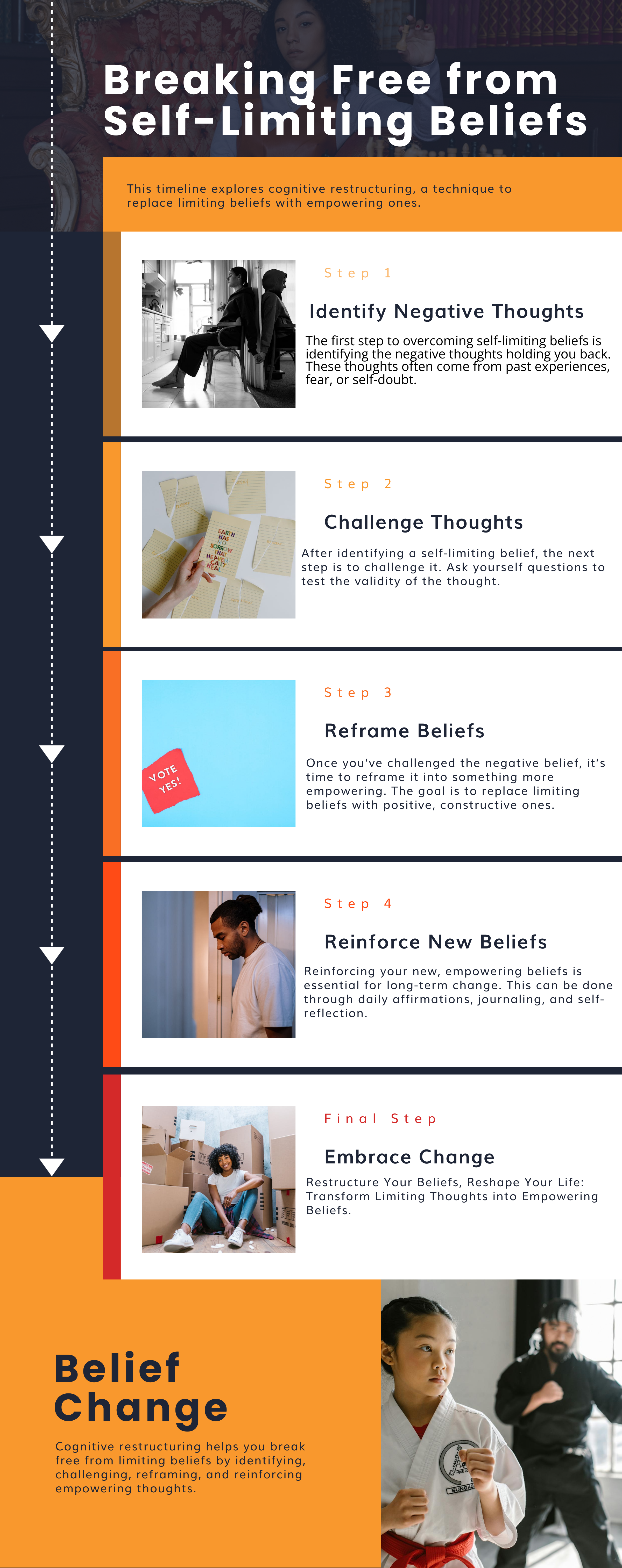
Framework: Cognitive Restructuring for Narrative Shifting
Cognitive Restructuring is a well-known psychological technique that helps us identify, challenge, and replace negative thought patterns. By applying this framework, you can rewrite the self-limiting stories that hold you back, creating new, empowering beliefs that align with your true potential.
Identify Negative Self-Talk: Start by becoming aware of the self-limiting beliefs that surface when you face challenges. Write them down. For example: “I’ll never succeed in this field.”
Challenge the Belief: Ask yourself: What evidence supports this belief? What evidence contradicts it? Often, self-limiting beliefs are based on emotions rather than facts.
Reframe the Belief: Replace the self-limiting belief with a more empowering one. For example, instead of “I’ll never succeed,” try “I’m capable of learning and improving with time and effort.”
Practical Steps for Narrative Shifting
Affirmations: Create daily affirmations that counter your self-limiting beliefs. For example, if you believe “I’m not capable,” replace it with “I’m capable of growth and learning.” Repeat these affirmations regularly to reinforce the new narrative.
Journaling Prompts: Use journaling prompts to explore the origins of your self-limiting beliefs. Reflect on moments when these beliefs first appeared and how they’ve shaped your life. By understanding their origin, you can begin to dismantle them.
Surround Yourself with Supportive People: Surround yourself with individuals who challenge you to grow and who reinforce positive beliefs. A supportive community is key to maintaining a new, empowering narrative.
Real-Life Example:
Consider a mid-career professional who believes, “I’m too old to change careers.” After engaging in Cognitive Restructuring, they challenge this belief by looking at real-world examples of individuals who successfully transitioned into new fields later in life. They reframe their internal story to “I have the skills and experience to pursue a meaningful career change, regardless of my age.”
As Lao Tzu said: “When I let go of what I am, I become what I might be.” Letting go of self-limiting beliefs opens the door to unlimited potential.
Part 4: Moving Beyond Comfort Zones for Sustained Growth
The Danger of Staying in the Comfort Zone
Much like a plant that outgrows its pot, staying within the confines of your comfort zone will eventually lead to stagnation. While it’s natural to seek comfort and familiarity, growth only occurs when we push beyond the boundaries of what we know. The more time we spend in the comfort zone, the more we miss out on new opportunities for development.
The Science Behind Comfort Zones:
Our brains are wired to seek safety and predictability. The comfort zone is a mental space where we feel safe but where little growth happens. It’s a psychological safety net, but if relied on too much, it leads to complacency and missed opportunities.
Framework: The Comfort Stretch Panic Model
The Comfort Stretch Panic Model helps us understand the three stages of growth: the comfort zone, the stretch zone, and the panic zone. The goal is to spend as much time in the stretch zone as possible, where you are challenged enough to grow but not overwhelmed.
Comfort Zone: This is where you feel safe but experience little growth.
Stretch Zone: This is where challenges push you to grow, but it’s still within your capacity to handle.
Panic Zone: This is where the challenges feel overwhelming, leading to anxiety or burnout.
Practical Tips for Stepping into the Growth Zone
Take Small Steps: Instead of jumping headfirst into discomfort, take small, manageable steps that gradually push you out of your comfort zone. Over time, these incremental steps will lead to significant growth.
Set Incremental Goals: Break your larger goals into smaller tasks that allow you to experience success regularly. Each task should push you slightly further into the stretch zone, building confidence without overwhelming you.
Celebrate Small Wins: Each time you successfully step out of your comfort zone, celebrate your progress. This reinforces the habit of growth and helps you recognize that discomfort leads to development.
Real-Life Example:
A professional who is comfortable with their current leadership role may begin to take on more challenging responsibilities, such as mentoring junior colleagues. Initially, this step might feel uncomfortable, but over time, it allows them to develop new skills, pushing them further into the stretch zone without reaching burnout.
The Importance of Resilience in Moving Forward
Resilience is like the steady wind that helps a ship maintain its course, even in stormy seas. It allows you to remain in the stretch zone longer without retreating back to the safety of the comfort zone. The more resilient you are, the easier it becomes to push through discomfort and emerge stronger on the other side.
Techniques for Building Resilience
Mindfulness: Mindfulness practices help you stay grounded and present when discomfort arises. By staying in the moment, you reduce the power of anxiety and worry about future outcomes.
Reflective Practices: Regular journaling and reflection allow you to process setbacks in a healthy way, turning challenges into learning opportunities rather than obstacles.
As Albert Camus once said: “In the depth of winter, I finally learned that within me there lay an invincible summer.” Resilience is that invincible summer, the inner strength that helps you thrive even in difficult circumstances.
Conclusion
Breaking free from regret, fear, and self-limiting beliefs is the key to unlocking personal progress. By reframing regret as a tool for growth, facing fear as a signal for opportunity, challenging internal narratives, and pushing beyond your comfort zone, you can build the resilience needed to pursue lasting change.
Take that first small step today—whether it’s reflecting on a past regret, facing a long-standing fear, or rewriting a self-limiting belief. Personal growth is a lifelong journey, not a destination, and every step forward matters.
As Epictetus wisely noted: “It’s not what happens to you, but how you react to it that matters.” Choose to react with resilience, growth, and a relentless pursuit of progress.
To support you on this journey, download the Progress and Resilience Tracker. This comprehensive guide offers exercises to reframe regret, strategies to face fear, journaling prompts to help you break free from limiting beliefs, and practical tips for stepping out of your comfort zone. For a deeper dive and to accelerate your personal growth, download The Complete Personal Growth and Resilience Mastery Bundle—your essential toolkit for lasting resilience and transformation. Last but definitely not last, for those early in their search, start your journey toward personal growth today with our free The Leadership and Personal Resilience Toolkit—gain clarity and move forward with purpose.
This article is part of our comprehensive guide, How to Create a Personal Development Plan. If you haven't explored it yet, be sure to check it out—it’s filled with actionable insights and links to essential resources on personal growth.
Disclaimer:
The content provided on this blog is for informational purposes only. While every effort is made to ensure the information is accurate and up-to-date, it should not be considered as professional advice. Always consult with a qualified professional before making any significant decisions based on the content. The opinions expressed are those of the author and do not necessarily reflect the views of any affiliated organizations. Any reliance you place on the information provided is strictly at your own risk. The author and website are not responsible for any losses, damages, or liabilities that may result from the use of the information in this blog.